

NFC Cards Explained: How They Work and Where Businesses Can Use Them
NFC technology has become increasingly common in smartphones, payment systems, smart cards and business applications.
Yet many people still wonder what actually happens when a smartphone is tapped against an NFC card.
Understanding the basic technology can help businesses identify where NFC cards may be useful.
What Is an NFC Card?
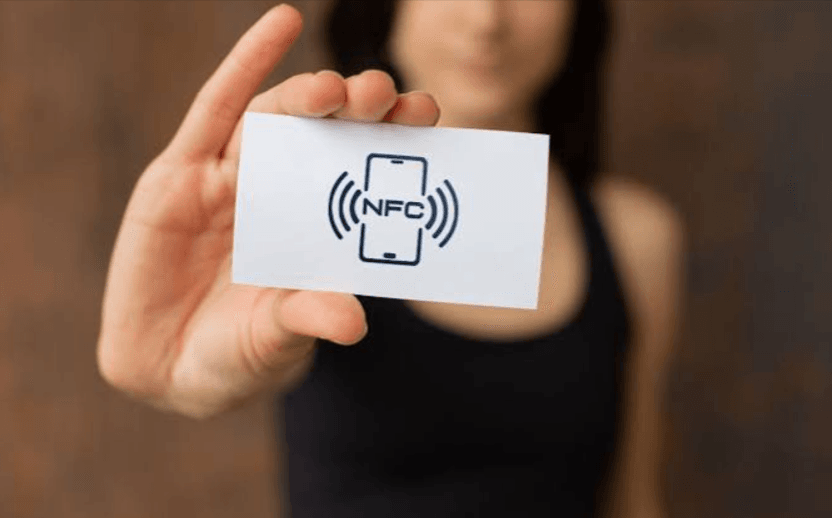
An NFC card is a physical card containing an NFC chip and antenna.
NFC stands for Near Field Communication, a short-range wireless communication technology that operates at 13.56 MHz.
Most NFC cards used for everyday applications are passive. They don’t require a traditional battery.
When a compatible smartphone or reader comes close to the card, the electromagnetic field generated by the device provides the energy needed for communication.
What Is Inside an NFC Card?
A typical NFC card contains:
- NFC chip
- Antenna
- Supporting substrate
- Protective card material
The chip stores information, while the antenna enables communication between the card and the NFC-enabled device.
The complete construction can vary depending on the type of card and its intended application.
How Does an NFC Card Work?
The process is simple from the user’s perspective.
Bring an NFC-enabled smartphone close to the card.
The phone detects the NFC tag and reads the information stored on it or follows the programmed action.
For business applications, the NFC card may simply contain a URL.
The URL can then take the customer to a digital profile, website, review page, menu or another online destination.
NFC Cards Have Many Applications
NFC isn’t limited to one industry.
Digital Business Cards
Professionals can use NFC cards to share digital contact information.
Customer Reviews
Businesses can use NFC cards to make it easier for customers to reach their review page.
Digital Menus
Restaurants can use NFC cards or stands to provide access to digital menus.
Social Media
Brands can connect customers directly with their social profiles.
Product Information
Businesses can connect physical products with online information, instructions or resources.
Identification
NFC technology can also be incorporated into identification and smart-card systems depending on the requirements.
NFC and QR Codes
NFC and QR codes are often presented as competing technologies, but they can work well together.
NFC provides a tap-based experience.
QR provides a scan-based experience.
A physical card can include both so customers have a choice.
This is especially useful in customer-facing applications where businesses want to make digital access as simple as possible.
Benefits of NFC Cards for Businesses
NFC cards can offer several practical advantages.
Easy Sharing
One tap can replace manually entering a URL or searching for information.
Digital Flexibility
When the NFC card points to an online profile, businesses can potentially update the destination without changing the physical card.
Professional Presentation
A well-designed smart card can become part of a company’s branding and customer experience.
Multiple Applications
The same basic NFC technology can support different business use cases.
Choosing an NFC Card
Before selecting an NFC card, businesses should consider:
- Intended application
- Required memory
- Card material
- NFC chip type
- Smartphone compatibility
- QR-code requirements
- Branding requirements
- Digital destination
- Durability
The right choice depends on how the card will actually be used.
NFC Solutions in Qatar
For businesses looking for NFC cards and smart networking products in Qatar, ETAP offers solutions designed for professional and customer-facing applications.
You can learn more about how NFC cards work here:
https://etap.qa/what-is-an-nfc-card-and-how-does-it-work/
The important thing is not simply having an NFC card, but creating a useful experience after the customer taps it.
Final Thoughts
NFC cards combine a familiar physical format with modern wireless technology.
They can help businesses connect physical interactions to digital experiences without requiring customers to download an app or manually type a long web address.
As businesses continue looking for simpler contactless experiences, NFC cards are becoming an increasingly practical tool for networking, marketing, customer engagement and digital information sharing.