

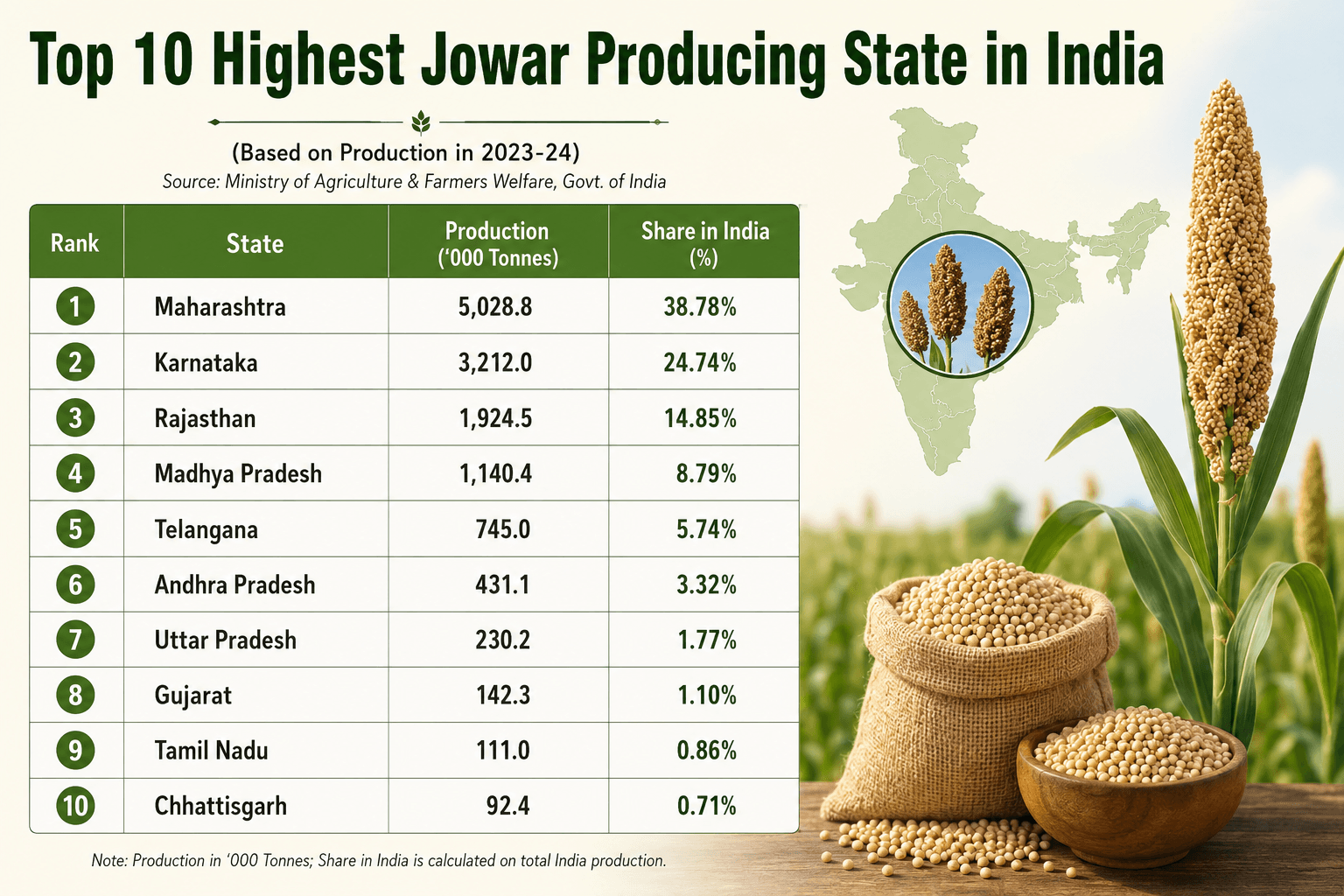
10 Highest Jowar Producing State in India
Jowar or Sorghum is a major cereal crop that is grown in Indian agriculture. The top 10 Highest Jowar Producing State in India have a major part in providing grain production in the nation. Jowar is valued due to its ability to withstand drought as well as its the nutritional worth. Indian cultivators depend upon the crop for sustainable farming as well as to supply the dietary requirements of millions of people.
Major States which are the leaders in the production of Jowar
States where jowar is produced in large amounts are characterized by favorable conditions for the climate and soil. State that is Maharashtra is the biggest producer, followed by Karnataka as well as Madhya Pradesh. These states benefit from modern farming methods and subsidies from the government to encourage production of crops. The top 10 Highest Jowar Producing State in India include other states, like Andhra Pradesh and Tamil Nadu that are vital in the food security of the country.
| Rank | State | Key Growing Season | Notable Feature |
| 1 | Maharashtra | Kharif & Rabi | The largest producer, with agricultural practices that are drought-resistant |
| 2 | Karnataka | Kharif | A strong hybrid adoption |
| 3 | Madhya Pradesh | Kharif | The expansion of the cultivation area |
| 4 | Telangana | Kharif | Semi-arid suitable for |
| 5 | Andhra Pradesh | Kharif | Improvements in irrigation support |
| 6 | Tamil Nadu | Rabi | Water management that is efficient |
| 7 | Gujarat | Kharif | Dryland’s farming strength |
| 8 | Rajasthan | Kharif | Arid climate adaptability |
| 9 | Uttar Pradesh | Kharif | Regional importance is growing |
| 10 | Haryana | Kharif | Modern farming methods that use mechanization |
Conditions that impact Crop Production in India
The growth of the jowar crop in these states could be attributable to many factors. The climate soil fertility, as well as irrigation facilities are crucial to increasing the yield of crops. Additionally, the implementation of modern agricultural systems and the availability of seeds that are high quality can significantly affect the yield. The top 10 jowar-producing states in India have the advantages of agricultural policies that allow efficient utilization of resources and a variety of crops to ensure steady production.
Effects of Jowar on Cultivation of Grains
Jowar’s cultivation can have a positive impact on the overall production of grain in India. As a staple food, it aids in the security of food and the sustenance of many farmers. The top ten jowar-producing states in india are essential to keeping the balance between supply and demand. The experiences of these states with regard to jowar production illustrates the importance of strategic planning in agriculture as well as the investment in infrastructure that will increase the production of grain.
Jowar Production Prospects.
The future of production of jowar in India is looking bright since more focus is being placed on sustainable farming practices. Due to the growing consumer awareness of healthy eating Jowar is expected to see an increase in demand. The top 10 jowar-producing states in India are investing in studies and research to enhance their crop varieties and improve their resistance to environmental stresses.
FAQ
What makes Maharashtra the largest jowar manufacturer?
The practices of farming, the fertile soil, and favorable climate have enabled Maharashtra to succeed when it comes to the cultivation of Jowar. The government is also a major contributor to the state by increasing the production of its agriculture.
What’s the benefit of jowar in Indian farming?
Jowar can be beneficial to Indian agriculture since it gives farmers in Indian agriculture a robust crop that helps in food security. It thrives in dry climates and is therefore suitable for regions that suffer from drought, and it is a source of income for many farmers.
What is the challenges of the states producing Jowars?
The main issues facing Jowar producing states include fluctuations in market prices and the impact of climate changes and the need for better irrigation systems. The most important thing is how to solve the issues to ensure that production levels remain high.